SmartSchedule Healthcare
In Development — MVP Q2 2026
CI/CD: Passing.NET: 9.0Docker: EnabledAzure: DeployedLicense: MITHIPAA: Compliant architectureCode Quality: SonarCloud
.NET 9C#ASP.NET CoreBlazor WebAssemblyMudBlazorEntity Framework CoreMediatR (CQRS)FluentValidationSerilogAzure SQLAzure Redis CacheAzure Service BusAzure Key VaultAzure Application InsightsAzure DevOpsML.NETAzure Cognitive ServicesTerraformDockerGitHub ActionsSonarCloudxUnitJWT AuthenticationHL7 FHIR R4
Private Repository
Overview
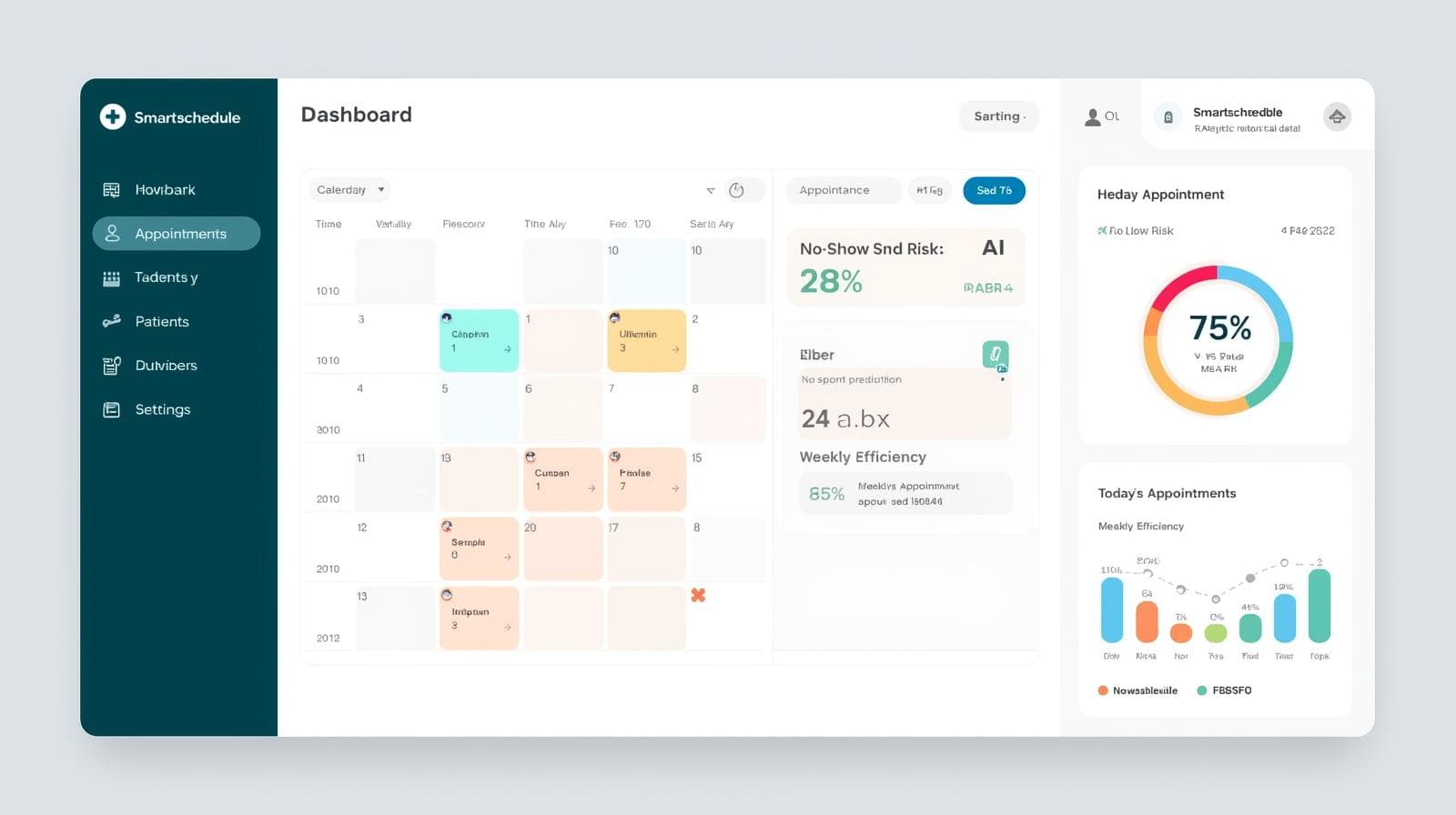
SmartSchedule Healthcare is an enterprise-grade AI-powered appointment scheduling SaaS platform built on .NET 9/10 and Azure. It targets a $150B annual inefficiency in healthcare scheduling — helping small to mid-sized practices (2–50 providers) reduce no-show rates by 40%, cut administrative overhead by 50%, and integrate bidirectionally with major EHR systems through a fully HIPAA-compliant, cloud-native architecture. The platform is in active development with a complete CI/CD pipeline, Terraform-managed Azure infrastructure across dev/staging/production environments, SonarCloud code quality gates, and a 200+ user story product backlog tracking toward a Q2 2026 MVP.
Challenges
- Designing a HIPAA-compliant, zero-trust architecture on Azure that satisfies SOC 2 Type II requirements without sacrificing developer velocity across a solo-led project
- Building a multi-tenant API with JWT authentication, role-based access control, and PHI encryption that passes automated SonarCloud security gates on every CI run
- Coordinating infrastructure-as-code (Terraform), CI/CD (GitHub Actions + Azure DevOps), container security (Trivy/OWASP), and code quality (SonarCloud) into a single coherent pipeline from day one of the project
Solutions
- Implemented AES-256 encryption at rest, TLS 1.3 in transit, Azure Key Vault for secret management, and complete PHI audit logging — documented in a full HIPAA compliance framework
- Built modular Terraform infrastructure with separate modules for networking, security, database, compute, and monitoring — deployed independently across dev, staging, and production environments
- Established a multi-stage GitHub Actions pipeline: test → SonarCloud analysis → OWASP dependency scan → Trivy container scan → build Docker image → deploy to Azure — all triggered on PR merge
Architecture Overview
Patient Portal / Provider Portal / Admin Dashboard (Blazor WebAssembly)
API Gateway & Load Balancer (Azure API Management)
Appointment Service | Patient Service | Notification Service (ASP.NET Core)
Azure Service Bus (Event Processing) | Entity Framework Core (Data Access)
Azure SQL Database | Azure Redis Cache | Azure AI Services (ML.NET)
Languages
C#88.7%
Shell6.6%
HCL3.3%
T-SQL1.3%
Dockerfile0.1%
Languages & Tools
.NET 9
C#
ASP.NET Core
Blazor WebAssembly
MudBlazor
Entity Framework Core
MediatR (CQRS)
FluentValidation
Serilog
Azure SQL
Azure Redis Cache
Azure Service Bus
Azure Key Vault
Azure Application Insights
Azure DevOps
ML.NET
Azure Cognitive Services
Terraform
Docker
GitHub Actions
SonarCloud
xUnit
JWT Authentication
HL7 FHIR R4
Key Stats
40%
Projected no-show reduction
50%
Target admin efficiency gain
85%+
ML no-show prediction AUC-ROC target
<100ms
Median API response time target
99.9%
Uptime target
36
Azure deployments to date
200+
User stories planned across 6 sprints
80%
Minimum enforced test coverage (xUnit)
3
Environments (dev / staging / production)
$150B
Addressable market size